Historical Accuracy in Fiction Writing
(And Why Narrative Always Comes First)
Here’s a very niche pet hate that consistently gets me yelling at pages and screens: when a character from 2nd century Rome or Tudor England or Mediaeval France or, well, any historical space announces their historical credentials by talking in Olde Worlde phrasing and historical idiom. As soon as I hear a “forsooth,” it’s over. Bonus points if the speaker doesn’t know that “thee” and “thou” are not interchangeable. And don’t even get me started on the inexplicable lack of contractions.
(Told you it was niche.)
And yet… I get it. Partly, at least. We read historical fiction to immerse ourselves in a world that’s both ours and not ours: a world that we recognise, from geography and dusty text books and a hundred symbols that have made their way down through the mists of time to form a picture that we understand as signifying some ephemeral concept of “then,” but which is still noticeably and thrillingly Other. Language is a huge part of how we construct that world, and most of us have been obliged to make sense of Shakespearean English at some point in our reading lives, so we’ve created a sort of linguistic shorthand that symbolises “past history” when we encounter it in fiction. I get it.
But you best believe it’s a core component of my argument against agonising over “accuracy” in our historical narrative spaces. (Side note: I absolutely do the irritating air quotes around “accuracy” when I talk about this in classes, too — but I promise there’s method to the pedantry.)
Because I’m an author who happens to also have a PhD in historical epic film, and I’m here to tell you: there’s no such thing as historical “accuracy.”
Let me explain.
Contents
Historical "Accuracy" is a Contested Term
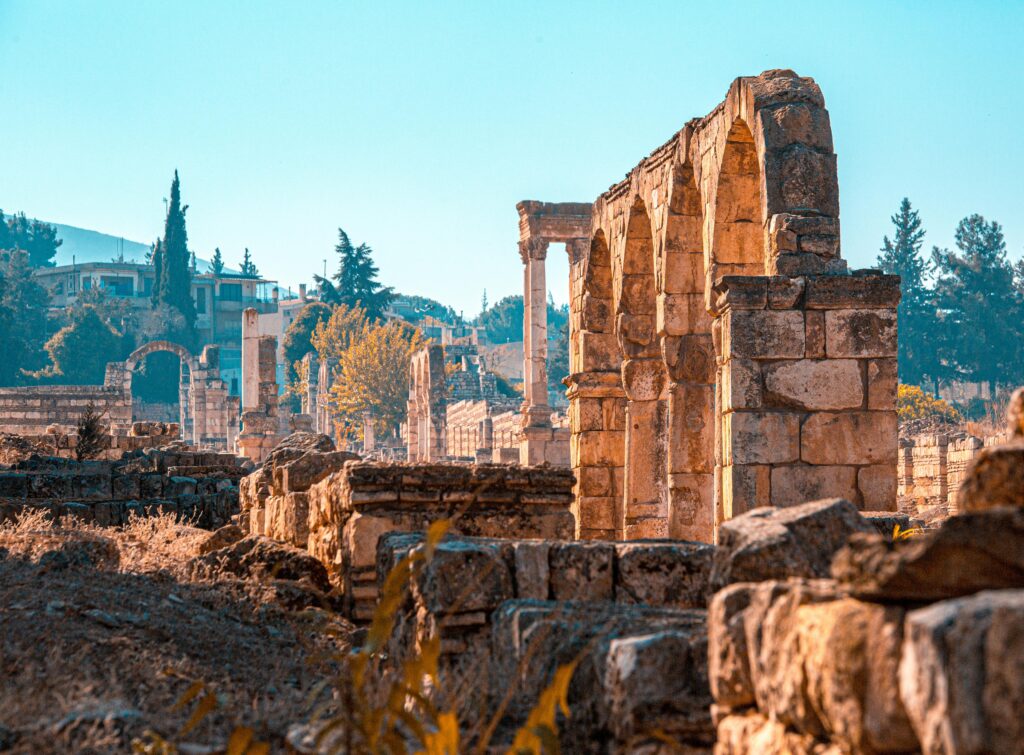
So, you know how Queen Cleopatra was a smoking hot babe who bathed in asses’ milk and died by asp bite? Do you know who else bathed in asses’ milk? Mad Roman Emperor Nero too, apparently — except that, no, he almost certainly didn’t, and neither did Cleopatra. It was, it seems, a fairly common idiom at the time and used to describe somebody who was so utterly, delusionally removed from the world and all common sense that they were completely unfit to govern. A kind of “Let them eat cake!” if you will (which Marie Antoinette also never said).
So, no. Cleopatra didn’t bathe in asses’ milk. Nor was she, most likely, conventionally attractive (we can’t know for sure, but her surviving coin portraits aren’t exactly Liz Taylor). Probably died by drinking poison too, rather than getting bitten by a snake on purpose, though that’s a debate that’s never likely to be definitively settled. Why does any of this matter? Because Cleopatra’s alliance with Mark Antony almost reconfigured the geopolitical world stage at the time, and that was a Big Deal to people like Augustus Caesar, who ended up winning that epic east/west power struggle and got to tell his version of history. So the ferociously intelligent woman who almost out-manoeuvred wildly patriarchal Rome got rewritten as a kind of sybaritic femme fatale who seduced men into doing what she wanted. And history just sort of… accepted this version of her for two thousand years.
This is why I put “accuracy” in annoying airquotes. Because historiography — the process of researching and writing history — always involves narrativising history to some extent. As an academic discipline, it’s evolved to try to minimise that narrativising tendency as much as possible, but there’s just no way to avoid it completely. History is made by humans, and humans have motivations, and motivations are always at least a little bit muddy. We can isolate verifiable facts — for example: we pretty much know for sure that Cleopatra was the last of the Ptolemaic dynasty to rule Egypt and she died in the year that we now call 30 BCE. But history is at least as much about the “why” and the “how” as the “who” and the “what” — and “why” and “how” will always be open to speculation. Cleopatra almost certainly died by suicide because her country had fallen to Roman invasion and she would have known that her future involved humiliation and death on somebody else’s terms… but to what extent was her decision influenced by the recent death of Mark Antony, her partner of 11 years? How much credence can we give to reports that she allowed herself to be envenomated by an asp, given the religious significance (and logistical difficulty) of asp bite as a mode of accessing the Egyptian afterworld? Did Augustus actually try to prevent her death — or was it easier for him not to have to deal with the fallout of governing a fallen state while its still-living monarch moldered in a Roman prison?
All of these are questions with multiple possible answers. The people who could give a definite answer have been dead for millennia. (And both were wily enough that I wouldn’t be inclined to trust their answers, anyway.) So in the absence of fact, we have to guess. If we’re lucky, it’s a guess with a lot of evidence behind it, but it’s still a guess. It’s open to interpretation, and interpreted in line with prevailing sociocultural norms at the time at which the guess is made. Accuracy? Nah. You can get close, but there’s very little certainty here. And that’s with two historical figures who are relatively well attested in the records. It only gets more difficult when the records are murky or incomplete or almost completely missing.
You can probably see where I’m going with this.
Creative License is a Tool, Not a Flaw

So, anyway, I recently watched Hamilton for the first time and, as is often the way with my brain, it immediately became a new hyperfocus and I started voraciously consuming as much information about the title character as I could lay my hands on. This was how I came to discover that It’s Quiet Uptown (which makes me ugly-cry every time) only hits the way it does because of a decent amount of timeline tweaking. I’m not going to spoiler it for anyone who hasn’t seen the show, but suffice it to say that the two major emotional beats that power this song are rooted in historical fact, but they are in no way as causally joined as the song makes out. Separate them — as you need to do for historical “accuracy” — and you would still have two powerful, challenging moments for the protagonist… but you wouldn’t get to have Lin-Manuel Miranda visibly fall apart on stage when Philippa Soo sings his words back to him, because, in real life, these were two separate griefs, and the song’s emotional gut-punch relies on them being fundamentally intertwined.
Knowing this does not stop me ugly-crying. It simply reinforces my belief that history is a backdrop to storytelling, not an obligation. If the story works better with a bit of temporal handwaving, then the job of the writer is not (necessarily) to make the story fit the history. It’s to find the best compromise between story and the historical record that inspires it.
“If the story works better with a bit of temporal handwaving, then the job of the writer is not (necessarily) to make the story fit the history. It’s to find the best compromise between story and the historical record that inspires it.”
We Use History in Some Very Complicated Cultural Ways
Let’s talk for a minute about mythic space.
Historian Richard Slotkin describes mythic space as a kind of “landscape of the imagination” (Slotkin, 1992) in which we construct meaning through signs and symbols that are rooted firmly in present-day norms. We use that space to tell ourselves stories about today, mapped onto an image of the past. That’s why Cleopatra always looks like a modern-day femme fatale in her screen incarnations: Theda Bara plays her as an early 20th century vamp in 1917; Rhonda Flemming clothes her in gold lamé in 1953’s Serpent of the Nile; Elizabeth Taylor goes to town on the kohl in the 1963 spectacular that almost bankrupted 20th Century Fox. It’s why everyone in The Tudors has flawless skin and shaved armpits. It’s why we can understand a word anybody says in A Knight’s Tale (if you’ve read any Chaucer, you’ll know what I mean).
We’re not consuming history. We’re consuming a story set in the mythic space we’ve created around our modern idea of that historical period.
Look at it this way. We know that science fiction and fantasy work a bit like a mirror that reflects a fantastical version of the time in which the story was written. Star Trek is a great example: when it first aired in the 1960s, it represented the best of cutting-edge futurism and progressive optimism. These days… it just looks like the 1960s. That’s because the stories we tell ourselves as a society are always a reflection of the historical moment in which they’re made — no matter what time period they’re set in. And it’s the same for historical fiction; it’s just that the historical past actually did exist — there’s a theoretically “correct” version of that past, unlike a speculative future — so it’s harder, sometimes, to recognise historical fiction as a fundamentally mythic space.
Hamilton addresses this head-on in its promotional materials when it calls the show “A story about America then, told by America now.” The music is anachronistic, the historically White European Founding Fathers are played by actors of colour, and cabinet debates are re-framed as rap battles. The idea for the musical was born when Miranda read historian Ron Chernow’s meticulously researched biography of the title character, so it’s rooted in historical “accuracy” — there’s those airquotes again — but it’s using an historical mythic space to tell a story about now, set against a backdrop of then.
Research Matters (But It Can Become an Excuse)
I research the hell out of my stories, so I feel very qualified in saying this: there comes a point where research becomes the way you avoid writing your story. It’s different for every writer, and it’s often different for every story, but it’s very easy to convince ourselves that we can’t start writing until we’ve absorbed every single tiny fact about the environment in which our story plays out. It’s seductive, because it’s not not necessary — and a decent breadth of historical knowledge is actively necessary when worldbuilding a different time period to the present — but there’s a difference between needing to know about the kind of cloth that was worn by working men in 18th century Barbados and needing to understand the exact stitching techniques that would have been used to tailor these clothes. And that difference can be really hard to spot when you get in your head about historical research.
Look. I’m a writer. I know writers. I teach writers. Some of us find that the discipline of writing our stories comes easily. Most of us are distractible chaos squirrels with big ideas and itchy brains. The only thing we fear more than having limited time to write is having time to write, but we’re bad at admitting that to ourselves. This is when endless historical research becomes seductive: it’s legitimate writing work… without the actual writing bit. We’re working on our novels. We’re not writing them, but nobody can say we’re not working hard.
Of course, you wouldn’t set out to write a mediaeval coming-of-age or Regency romance or World War II thriller without making damn sure you had an in-depth, informed, detail-oriented sense of the world in which it operates. You’ll make sure that your characters wear period-appropriate clothes, that their homes don’t have glass windows in an era where glass windows were limited to the super-rich, that they’re not radioing commands back to base on equipment that wasn’t invented for another 20 years. But a waistline two inches too high? A newspaper printed in a font that wasn’t widely available until a decade later? A girl’s name that’s not attested in census records before 1955? That’s not knocking anybody out of your storyworld — and, as an active member of the Our Flag Means Death fandom, I can promise you that the people who love your writing will take joy debating the finer points of your creative licence. It will be one of the ways in which they express their obsession with the world you’ve built. Every historical fandom I’ve ever been a part of has lovingly dissected the ways in which the universe diverges from the record and why the creator made that particular choice. We are here for it. It deepens our engagement; it takes nothing away.
“Some writers find that the discipline of writing our stories comes easily. Most of us are distractible chaos squirrels with big ideas and itchy brains. “
Tips for Balancing Narrative Need and Historical Accuracy
So, it’s all well and good me telling you all this… but how do you make sure you’re toeing the line between “stuff you need to know” and “stuff that’s helping you avoid actually writing”? I have some thoughts on that:
- Set yourself a target end-date for the research phase: And this is a maximum, not a goal. If you feel like you need to give yourself six months to really immerse yourself in the period you’re writing, then your end-date is six months from now. If you finish earlier, great! Extra novel-writing time. If you get to the end of the six months and you feel like you need to keep going? You can — but you also have to start writing, so research now needs to fit in around your weekly word count goals.
- Ask forgiveness, not permission: The literal meaning of this phrase doesn’t make a lot of sense in context, but I use it here to indicate that you should write your story the way it needs to be written and work out later if every detail is strictly accurate (and also if it needs to be). Say, for example, you have a dynastic drama set in Edwardian London, and a climactic scene requires Lady Rosalind to trip on a kerb stone as she flees her brother-in-law’s carriage. Were there kerb stones on the streets of Edwardian London? That’s a question for later: the scene you’re writing needs a kerb stone, so that’s what she trips over. As it happens, kerb stones are period-appropriate, so hurray — but if they weren’t, you’ve lost nothing. You can decide, in the editing phase, if you want to keep the anachronism and pretend you haven’t noticed, or find something else to cause her fall. But, crucially: you haven’t lost days of writing time to a detail that… doesn’t really matter, in the grand scheme of things.
- Build your narrative arc first: This is something that comes up regularly in discussions with writers who want to tell the life story of an historical figure, especially when we look at mapping out their story’s plot points. They go back and forth about where to start and where to end, when in fact the question is actually much simpler: what’s the specific story that you’re telling about this person’s life story? Because a life story is long (often, anywhere up to around 80-ish years) and we can’t possibly commit all of that to the page. We have to isolate the message, the theme, that we want to convey to the reader, and discard what doesn’t serve that theme. Real life doesn’t move in predictable beats. Narrative does, so we may have to compress, extend, or foreground some elements of the historical record in order to deliver a satisfying story.
- Sometimes, you’ll have to just make a choice: Philippa Gregory is the international bestselling author of The Other Boleyn Girl. She also has a PhD, so she knows a thing or two about research, and the majority of her novels are set in the Tudor period, so she knows a thing or two about that era of history. She describes Henry VIII as a tyrant so she’s not exactly an apologist for his blood-soaked marital strategy… and yet, she made the decision, in the book that made her name, to answer “yes” to the question of whether or not the accusations of incest he made against Anne Boleyn at her trial were true. That drew some Big Yikes from various commenters, but it was a decision that, historical “accuracy” aside, served the story that The Other Boleyn Girl was telling: a story of female disempowerment and desperation, of the relentless drive towards dynastic security at all costs. In this story, Gregory’s Anne Boleyn (no matter what the real Anne Boleyn might have thought or wanted or done) was cornered by her lack of a living son and felt that she had no alternative but to sleep with her brother to conceive the heir she couldn’t conceive with her husband. History is full of “maybe” and “potentially” and “some scholars believe” — but narrative fiction is told from the perspective of people who are there, and there’s no “maybe” for them; there’s just what is. Sometimes, you won’t have an “accurate” answer to give. Your job as a writer, then, is to choose the one that serves your story.
- Settings change; senses stay the same: It’s easy, in the midst of the drive for accuracy, to lose sight of the fact that one of the greatest joys of reading fiction set in a different time period is simply to experience that time period. Yes, a host of historical detail will contribute to that experience, and yes, it’s absolutely our job as writers to give our readers enough of that detail to allow them to metaphorically step into the storyworld, but overwhelmingly when we’re researching that detail, we’re researching visual detail. Visual is important, but it’s only one of the senses we use when we experience our world, and over-delivering on visual at the expense of the other four gives our reader an incomplete picture. And scent, touch, taste, and sound are all senses that are going to require an imaginative leap on the part of the writer to provide — and which are rarely captured by the history books, so come with a hefty dose of artistic licence. You may not know the exact colours of the tapestries that hung on the walls of a Medieval castle, but you know what a cold stone floor feels like beneath your feet. You know what a wood fire smells like, and how the taste of it lingers on the tongue. You know what footsteps sound like when they echo off a smooth, enclosed surface. These are the details that really make a scene come to life.
Final Thoughts: A Writer’s Responsibility is to Story First
Bridgeton wouldn’t be Bridgerton if it existed anywhere other than Regency-era London. It also wouldn’t be Bridgerton if the streets of Regency-era London were covered in horse excrement and everyone over the age of 40 was missing most of their teeth. Queen Charlotte: A Bridgerton Story would absolutely not work with a White actor in the role of Charlotte von Mecklenburg-Strelitz, and yet it’s unquestionably the show’s very best season (I will die on this hill).
Bridgerton is up-front about its mythic-space setting, in a lot of the same ways as Hamilton, but both shows are also advancing non-trivial claims about historical accuracy. In Bridgerton, it’s the costuming, the language (not a contraction to be found, alas), a selection of the most narratively convenient contemporary social mores. In Hamilton, it’s a loose adherence to a recognisable historical record, it’s the name-checking of the Founding Fathers and their associates, it’s the show’s provenance in a biography by a respected historian. Both shows want you to recognise the historicity, at the same time as they play fast and loose with it as suits the stories they’re actually telling.
I’m not suggesting that you have to get all ludic postmodern with your historical drama. I’m definitely not suggesting that you need to wilfully incorporate anachronism because what’s the point, reality is meaningless, everything’s a construct anyway. As much as there’s room for Bridgerton and Hamilton, there’s also room for what we might call “traditional” historical fiction, fiction that sets out to welcome its readers into a different time and let them unproblematically soak up the period detail. What I am saying is this: you, as the writer, are in charge. Historical “accuracy” is like an adjustable dial, and you can turn it up and down as needed — even in the space of a single narrative. And you absolutely should turn it down when it doesn’t serve your story.
Because the “historical” part of historical fiction is a qualifier — it describes something about the noun, but it’s the noun itself that counts. Fiction is story, and that’s what you’re writing. So research your world, uncover the tiny details that help it spring to life in your reader’s mind — and enjoy the satisfaction of knowing that your character is using a type of fork that was briefly popular in the 1760s but fell out of use shortly after the year in which your story was set…
But let go of the “accuracy” imperative. It’s an impossible goal — and it’s not the most important part of your job as a writer, anyway.

What’s your favourite “Hey, that never happened… but I like it!” narrative? Let me know in the comments!
Read next